

 TMTS Virtual Application
Tag Result
#flange
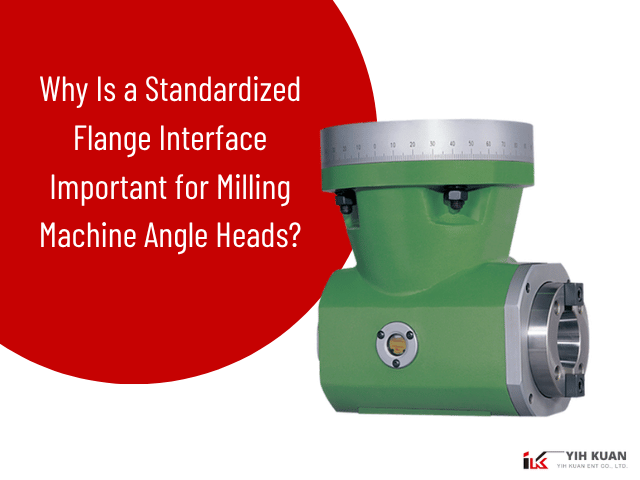
Introduction: The Overlooked Key to Milling Machine Angle Head PerformanceWhen discussing a milling machine angle head, most engineers focus on cutting capacity, angle flexibility, and torque performance. However, one critical design feature is often overlooked: the flange interface.In real machining applications, the performance of a milling machine angle head depends not only on cutting ability, but also on how well it integrates with the machine tool. A poorly designed or inconsistent flange interface can result in longer setup time, compatibility issues, reduced machining accuracy, and unstable cutting performance.As manufacturing moves toward high-mix, low-volume production and greater flexibility, fast changeover and easy equipment integration have become increasingly important. YIH KUAN ENT CO., LTD. specializes in the development of milling heads and angle heads for milling machines, helping customers expand machining capability and handle more complex applications. To fully achieve these benefits, standardized flange interface design plays a vital role.What Is the Flange Interface of a Milling Machine Angle Head?The flange interface is the key connection structure between the milling machine spindle and the angle head. Its main functions include:Ensuring accurate mounting and positioningTransmitting spindle torque to the cutting toolMaintaining concentricity and machining precisionProviding the rigidity required during machiningIn other words, the flange interface is not just a simple connector. It is a core design element that directly affects the accuracy, stability, and overall performance of the milling machine angle head.Problems Caused by Non-Standard Flange InterfacesIn many machining environments, different angle heads use different flange interfaces. This can create several practical problems:Recalibration is required every time the angle head is changedInstallation errors are more likely to happenATC (Automatic Tool Changer) settings become more complicatedMore spare parts must be stocked and managedChangeover time increases, reducing production efficiencyThese problems are especially common in high-mix, low-volume machining environments, where frequent switching between machining tasks is required.Benefits of a Standardized Flange Interface for Milling Machine Angle HeadsA standardized flange interface allows an angle head to become more than a standalone accessory. It becomes part of a flexible and modular machining system.1. Faster Changeover and Shorter Setup TimeWith a standardized flange interface:Different angle heads can be replaced quicklyRe-alignment and repeated calibration are minimizedMachine downtime can be significantly reducedThis is especially valuable for manufacturers that need to switch between multiple machining operations.2. Lower Inventory and Management CostsA standardized flange design helps reduce operational complexity by allowing:One interface to support multiple angle headsFewer spare parts and mounting componentsSimpler storage and easier inventory managementThis can reduce both maintenance burden and management cost.3. Better Compatibility and Greater Machining FlexibilityA standardized flange interface for milling machine angle heads makes it easier to:Switch quickly between different machining requirementsApply angle heads to different machine configurationsSimplify equipment integration and implementationThis improves the flexibility of the overall machining system.4. More Stable Accuracy and Machining QualityA unified flange interface also helps maintain:Consistent positioning referenceReduced runout errorBetter machining consistencyMore stable machining qualityFor precision machining, flange consistency is a critical factor.How YIH KUAN Angle Heads Improve Milling Machine FlexibilityYIH KUAN ENT CO., LTD. offers a complete range of angle heads for milling machines to meet different machining requirements, including:90-degree angle headsDeep-hole machining angle heads45-degree universal milling headsExtended-type angle headsThese milling machine angle heads are widely used in applications such as:Side millingSide-hole drilling and tappingDeep cavity machiningInclined surface machiningBy selecting the right angle head and combining it with a standardized flange interface, manufacturers can improve machine flexibility and reduce setup time.YIH KUAN’s Key Advantage: Standardized Flange Interface DesignOne of YIH KUAN’s main technical strengths is that different angle heads are designed with a standardized flange interface.This means:Different angle heads can share the same mounting interfaceReplacement can be completed quickly without repeated setupThe risk of operator error can be reducedChangeover time can be significantly shortenedWith this design, the milling machine angle head becomes a modular machining solution rather than just a single-purpose accessory.Applications of Standardized Flange Interfaces in Different IndustriesMold IndustryIn mold manufacturing, deep cavity machining and side machining are often required in the same workflow. A standardized flange interface helps reduce setup time and improve machining efficiency.Automotive Parts IndustryFor side-hole machining and cross-hole machining, quick changeover and stable production are essential. Standardized angle head interfaces are ideal for mass production environments.Aerospace IndustryAerospace parts often require multi-angle machining with high precision. A stable flange interface helps improve consistency, rigidity, and machining reliability.General Machine ShopsGeneral machining shops often handle small-batch, high-variety production. Standardized flange systems allow faster response to changing machining requirements.Key Factors to Consider When Choosing an Angle Head Flange SystemSpindle specifications of the milling machine (NT / BT / CAT / HSK)Input and output side compatibilityATC automatic tool change requirementsThrough-coolant or center coolant requirementsMachine load capacityRequired torque and spindle speedWhether the flange interface is standardizedA proper flange match helps avoid installation problems and ensures the best machining performance.FAQ About Milling Machine Angle Head Flange InterfacesCan all milling machine angle head flanges be interchanged?Not always. Different brands often use different flange designs, so compatibility issues may occur.Why is a standardized flange interface important?A standardized flange interface improves efficiency, reduces setup errors, simplifies operation, and supports faster angle head replacement.Can a standardized flange interface improve productivity?Yes. It is especially useful in machining environments that require frequent tool changes, fast setup, and flexible production.Does flange design affect machining accuracy?Yes. Flange design directly affects concentricity, rigidity, runout performance, and machining stability.Conclusion: Why Standardized Flange Interfaces MatterIn modern machining, productivity depends not only on cutting performance, but also on setup efficiency, machine integration, and operational flexibility.By adopting a standardized flange interface for milling machine angle heads, manufacturers can:Reduce setup timeImprove machining stabilityLower operational complexityIncrease machine utilizationBuild a more flexible machining environmentWith years of experience in milling head manufacturing, YIH KUAN ENT CO., LTD. provides a wide range of angle heads for milling machines and helps customers improve efficiency through standardized flange interface design.If you want to improve machining capability without increasing equipment investment, choosing a milling machine angle head with a standardized flange interface can be a highly effective solution.

We use cookies to optimize and continuously update it according to your needs.The settings can be changed at any time under "Privacy"