

 TMTS Virtual Application
Tag Result
#yaxis
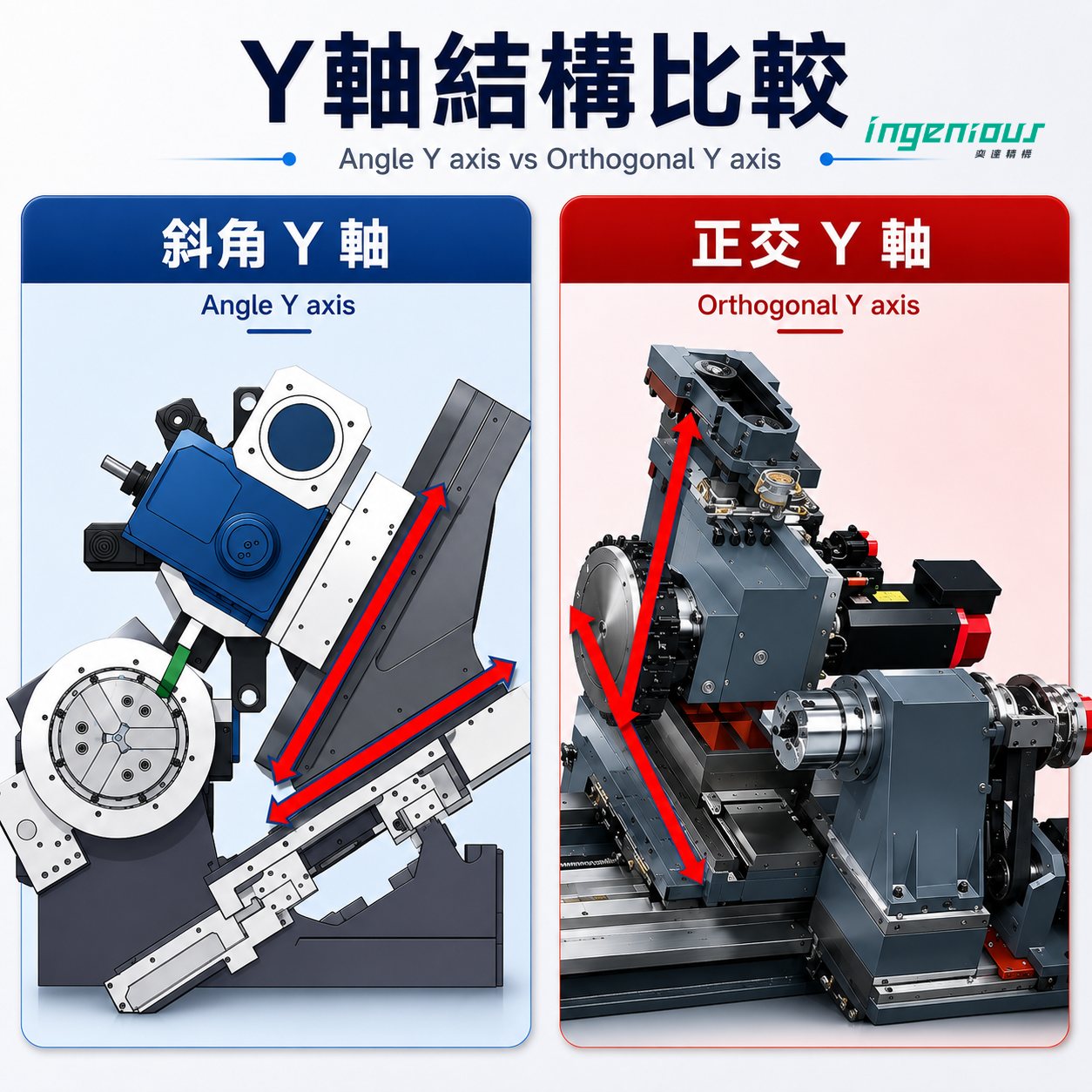
Same Y-axis. Completely different engineering.On a turn-mill machine, "having a Y-axis" isn't the interesting part anymore. How that Y-axis is built is what actually shapes your results.→ Virtual (Angle) Y-axis — the slide runs at 30°–45°. Short force path, compact footprint, strong rigidity, excellent value. A pragmatic fit for mid-to-high-end turn-mill work.→ Orthogonal Y-axis — a true 90° vertical axis with fully independent XYZ. Cleanest geometry, simplest thermal model, and naturally aligned with AI compensation and lights-out production. The go-to for semiconductor, aerospace, and medical.One borrows motion at an angle. The other goes straight up and down.Neither is "better." There's only fit. And the real competitiveness was never the Y-axis type alone — it's total machining capability: force-flow design, thermal stability, error compensation, AI integration, automation.Full breakdown here [https://reurl.cc/qpRen0]

We use cookies to optimize and continuously update it according to your needs.The settings can be changed at any time under "Privacy"