

 TMTS Virtual Application

YIDA PRECISION
/
06. 08. 2026
Why Y-Axis Changes What a Lathe Can Do?
Same Y-axis. Completely different engineering.
On a turn-mill machine, "having a Y-axis" isn't the interesting part anymore. How that Y-axis is built is what actually shapes your results.
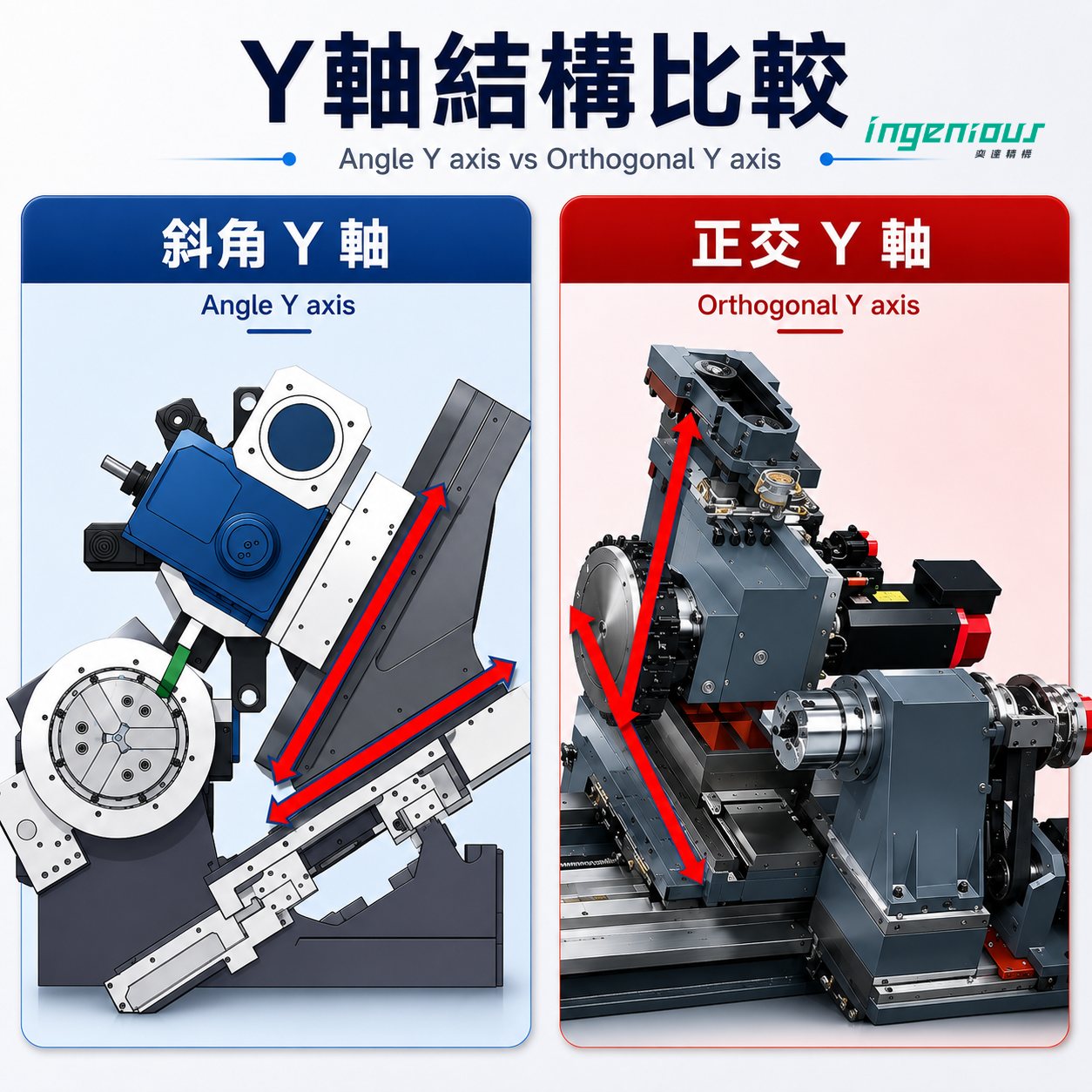
→ Virtual (Angle) Y-axis — the slide runs at 30°–45°. Short force path, compact footprint, strong rigidity, excellent value. A pragmatic fit for mid-to-high-end turn-mill work.
→ Orthogonal Y-axis — a true 90° vertical axis with fully independent XYZ. Cleanest geometry, simplest thermal model, and naturally aligned with AI compensation and lights-out production. The go-to for semiconductor, aerospace, and medical.
One borrows motion at an angle. The other goes straight up and down.
Neither is "better." There's only fit. And the real competitiveness was never the Y-axis type alone — it's total machining capability: force-flow design, thermal stability, error compensation, AI integration, automation.
Full breakdown here