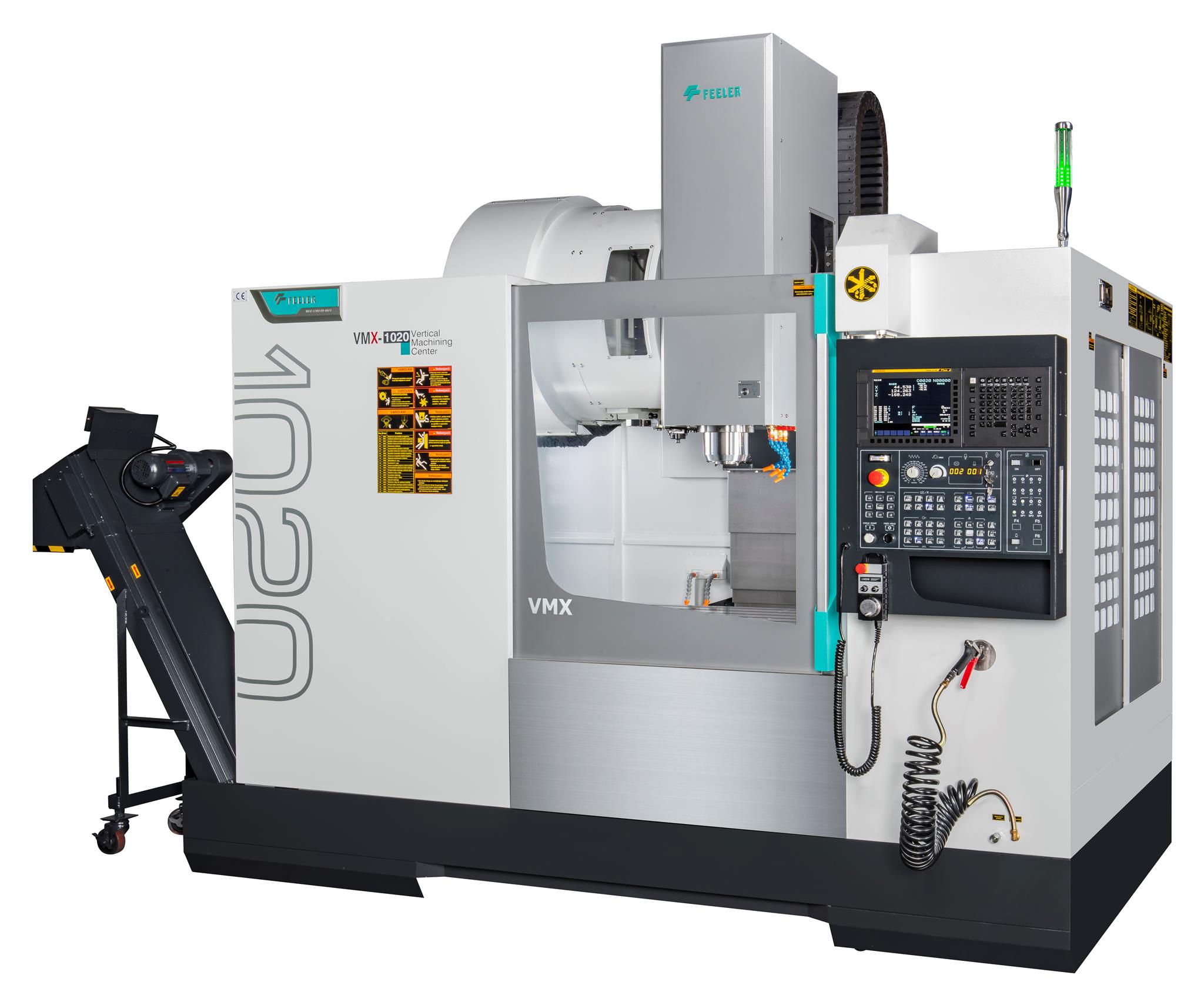
Technical Advantages of FEELER's VMX Vertical Machining Center
FEELER continuously enhances its technology and performance to meet the evolving market demands in high-speed cutting, precision machining, and mold manufacturing. The VMX series boasts outstanding processing efficiency, precise machining accuracy, and operational convenience, providing customers with excellent machining experiences and production efficiency.
Direct Drive Spindle
The VMX series vertical machining centers feature a direct drive spindle system, where the motor is directly linked to the spindle system. This design minimizes vibration and heat generation compared to traditional belt-driven spindles, resulting in enhanced machining surface accuracy and prolonged spindle lifespan. Compared to the previous generation, the spindle speed has increased by 20%, with a 6% torque increase. This enhancement enables faster material removal during machining, significantly improving processing efficiency and production capacity.
Rigidity Structure and Precision Machining
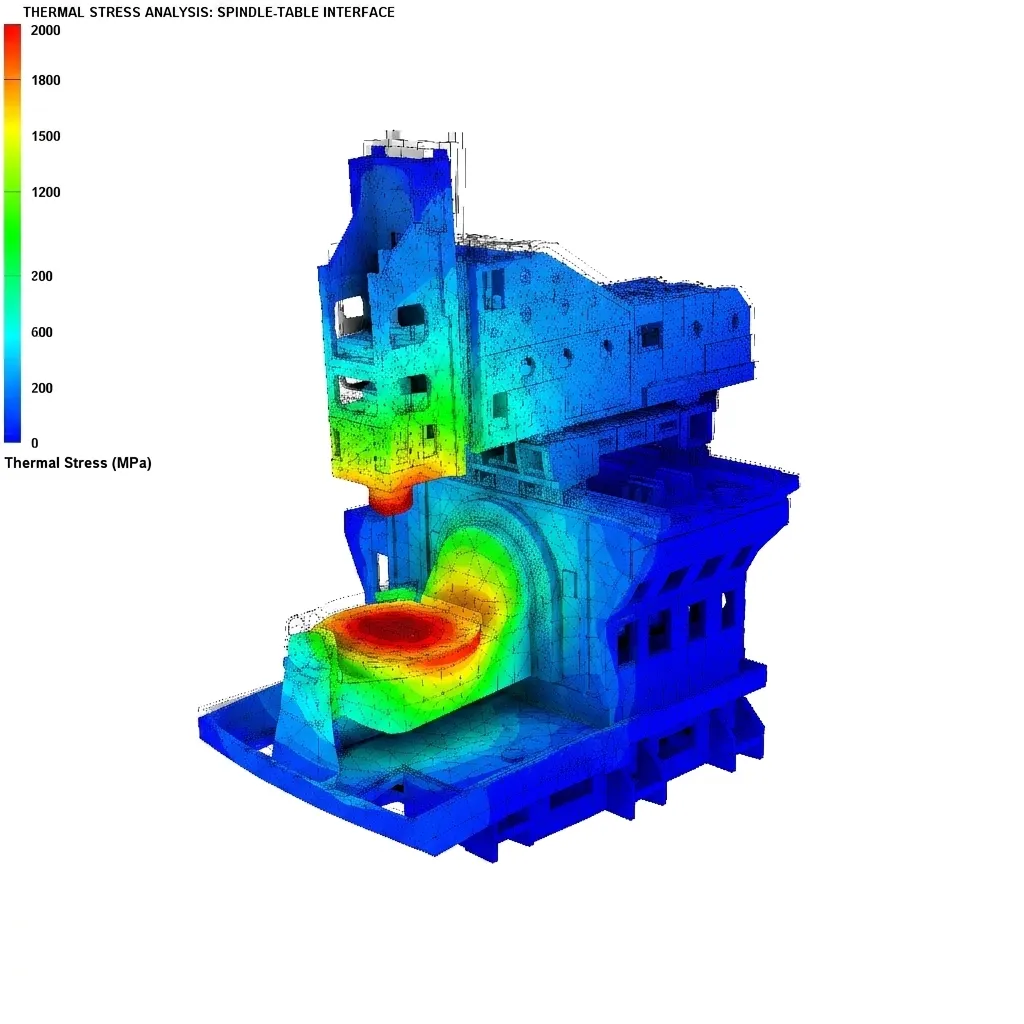
The machine exhibits exceptional rigidity structure and precision machining capabilities. Its integrated spindle head design and A-shaped column base reinforcement provide superior stability and rigidity, optimizing machining accuracy and reliability. Finite element analysis ensures the best structural rigidity, precision, and reliability. The VMX series excels not only in high-speed cutting but also in meeting stability requirements under various machining conditions. Additionally, the machine's use of linear guides maintains high machining accuracy while offering rapid machining advantages.
Tool Change System and Operational Convenience
The VMX series implements intelligent and efficient designs in its tool change system, enhancing operational convenience and production efficiency. Utilizing a quick and stable tool arm-style tool change system enables rapid tool changes, boosting production efficiency. Furthermore, the streamlined large window design allows operators to easily observe machining conditions inside the machine, facilitating convenient operation and monitoring.
Chip Removal Design and Internal Cleaning
Comprehensive optimization of chip removal design and internal cleaning ensures stability and efficiency during machining. The series adopts a chip removal groove design with increased slope and a powerful chip flushing device, ensuring smooth chip removal and preventing blockages and accumulations, maintaining cleanliness in the machining area, and further enhancing machining stability and accuracy.
Aesthetic Design and Overall Integrity
The machine prioritizes aesthetics and overall integrity in its design, offering customers a visually appealing choice in addition to excellent performance. The streamlined large window design provides clear visibility of the machine's internal machining conditions, adding modern and technological aesthetics. Additionally, the use of stainless steel material at the lower edge of the front door enhances the appearance and durability, contributing to an overall elegant and damage-resistant design. Moreover, the specially added beauty backplate enhances the machine's rear aesthetics, adding to its overall professionalism.
FEELER Green Manufacturing and Sustainable Future
Amidst global attention to issues such as climate change and economic growth, sustainable development goals have become a global focus. FEELER actively develops green machine tool products, providing process optimization, green energy-saving, and intelligent maintenance to enhance production efficiency and achieve sustainable development goals.
VMX Series: Efficient and High-Precision Production Tool
The VMX series vertical machining centers excel not only in processing efficiency, precision, and stability but also in improving operational convenience and aesthetics, providing customers with all-round high-quality products. These technological and design optimizations not only enhance production efficiency but also reduce production costs while improving the company's image and competitiveness. Considering its outstanding performance and flexible application, the VMX series vertical machining center is undoubtedly your best choice. For any inquiries or further information about our products, please feel free to contact us at www.feeler.com.
Spindle, Guideway, and Chip Removal Recommendations for Aluminum, Steel, Cast Iron, and Hard-Brittle Materials
Selecting the right CNC milling machine depends on workpiece material, cutting load, chip form, and accuracy requirements. This guide summarizes practical spindle, guideway, and chip removal considerations for aluminum alloys, steel, cast iron, and hard-brittle materials.
The following sections provide recommended machine configurations for four common workpiece material groups.
1. Aluminum Alloys: High-Speed Cutting and Efficient Chip Evacuation
Aluminum alloys such as 6061 and 7075 have low cutting resistance and are suitable for high-speed machining. However, built-up edge and bulky lightweight chips may occur. Poor chip evacuation can lead to recutting, tool adhesion, or surface scratches.
Spindle configuration: Use a 12,000 rpm or higher direct-drive spindle. For small tools, high feed rates, or better surface finish, 15,000 rpm may be considered.
Guideway configuration: Use high-lead servo ball screws and high-speed ball linear guideways to support rapid feed and dynamic response.
Coolant and chip removal: Use high-flow chip flushing and a scraper-type chip conveyor for efficient aluminum chip evacuation.
FEELER reference models|VMX Series is suitable for high-speed parts, precision components, and 3C housings. For cast aluminum automotive parts or mass production, FMH-500 (#40) with APC or automation can be evaluated.
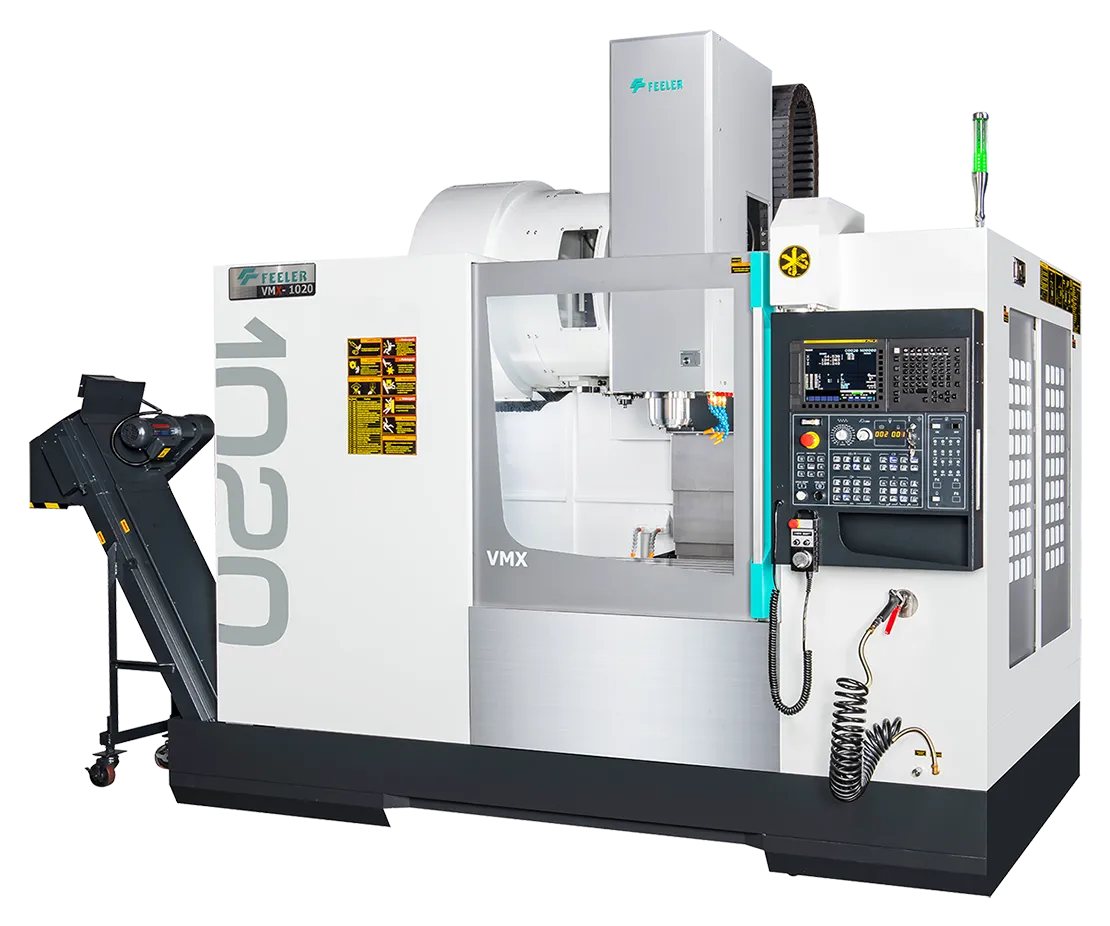
VMX-1020 Vertical Machining Center
2. Steel and Mold Machining: Torque, Rigidity, and Surface Quality
Medium- and high-carbon steel and mold steels such as P20 and H13 require stable cutting performance under continuous load. Roughing emphasizes on low-speed torque and machine rigidity, while finishing emphasizes on spindle rotation response, vibration control, and surface quality.
Spindle configuration: For roughing, a belt-driven spindle can provide stronger low-speed torque. For finishing, a 10,000–12,000 rpm direct-drive spindle is suitable.
Guideway configuration: Roller linear guideways provide higher rigidity and load capacity. Box ways may be considered for long-duration heavy-load cutting.
Coolant and chip removal: Use a chain-type chip conveyor according to chip characteristics, and ensure effective coolant flow for heat removal.
FEELER reference models|The VMP Series emphasizes structural rigidity and long-term machining stability. The VMX large-travel series, such as the VMX-1650, can be selected based on workpiece size, roughing and finishing requirements, and production capacity. Developed specifically for mold machining, the VDX Series features an extended Y-axis travel and reinforced structural design, making it suitable for large molds and deep-cavity machining.
3. Cast Iron and Heavy Cutting: Damping, Load Capacity, and Chip Control
Cast iron (FC/FCD) produces fine, abrasive particles and intermittent cutting impact. Machine damping, vibration absorption, and enclosure sealing are key considerations.
Spindle configuration: For heavy cutting, use a low-speed, high-torque belt-driven or geared spindle, typically in the 4,000–8,000 rpm range.
Guideway configuration: Wide box ways and a rigid cast-iron structure provide damping and help reduce vibration during intermittent cutting.
Chip removal and protection: Use enclosure sealing, dust collection, magnetic scraper conveyors, or fine-particle filtration according to machining conditions.
FEELER reference models|VBX box way series, including the VBX-1300, is suitable for medium to large castings and heavy-load milling. For large automotive castings or continuous multi-face machining, FMH Series may be evaluated.
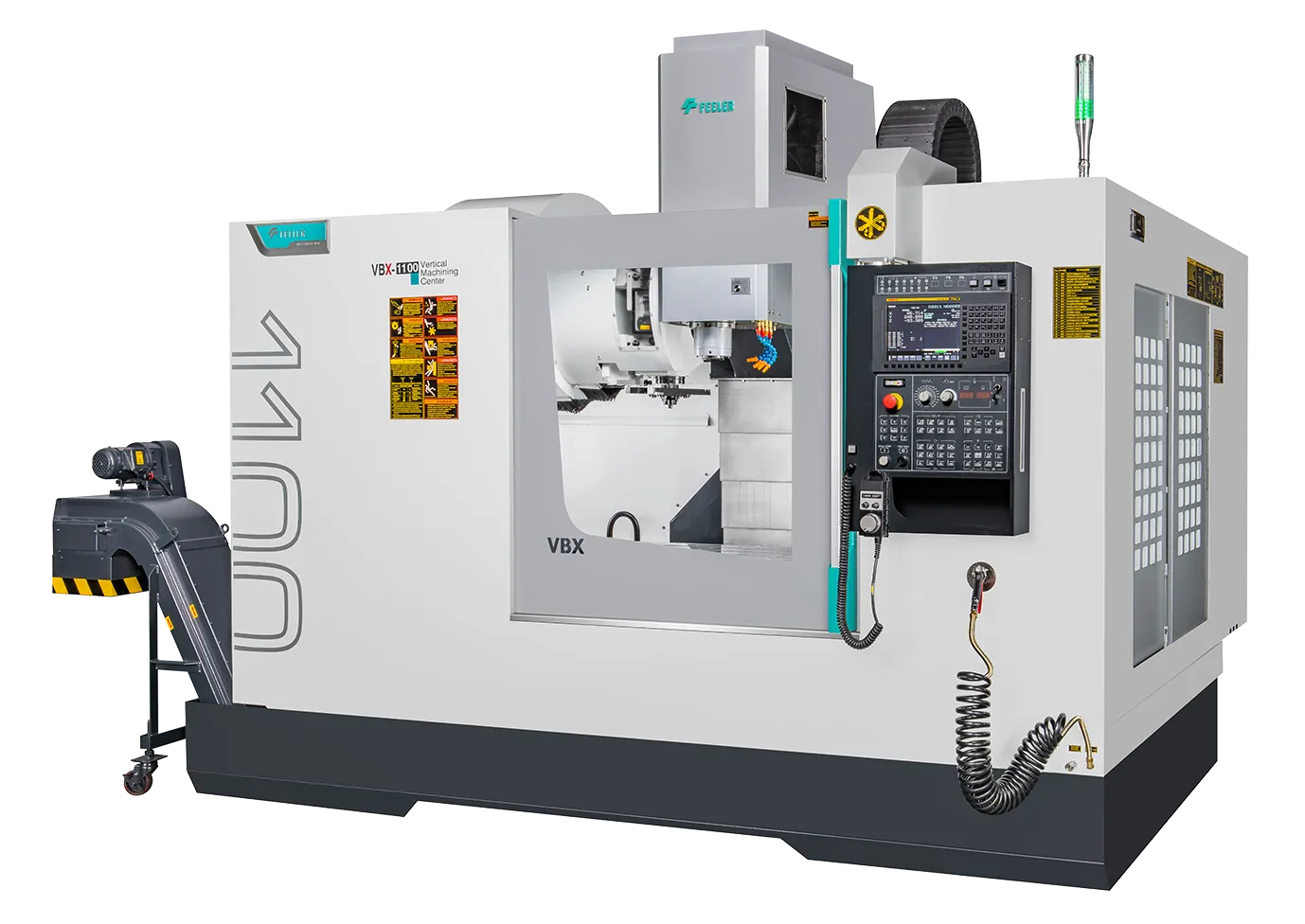
VBX-1100 Vertcial Machining Cetner (Box Way)
4. Hard-Brittle Materials: Reducing Cutting Force and Chipping Risk
Quartz, glass, silicon carbide, and advanced ceramics are prone to micro-cracks, edge chipping, and tool wear. Ultrasonic machining, fine-particle filtration, and proper enclosure protection help improve machining stability.
Ultrasonic machining: Micron-level high-frequency axial vibration helps reduce cutting force, suppress edge micro-cracks, and extend tool life.
Spindle configuration: A 20,000 rpm high-speed direct-drive spindle is recommended for ultrasonic machining applications.
Filtration and compatibility: Confirm fine-particle filtration, spindle interface, tool holder specification, non-contact transmission, and control system compatibility.
FEELER reference models|QMP Series can be equipped with an ultrasonic machining module. Other models may be evaluated according to spindle interface and control requirements.
5. Quick Reference: Material and Machine Configuration
Use the table below as a quick reference. Final specifications should be confirmed based on workpiece size, weight, tooling, accuracy, and production requirements.
Workpiece Material / Application
Main Machining Characteristics
Configuration Direction
FEELER Reference Models
Aluminum alloys, 3C parts, precision light metals
High-speed cutting, built-up edge control, large volume of lightweight chips
12,000–15,000 rpm direct-drive spindle; ball linear guideways; high-flow chip flushing system and scraper-type chip conveyor
.VMX Series .FMH-500(#40)
Steel, medium-hard steel, molds, general steel parts
Higher cutting resistance and thermal load; different requirements for roughing and finishing
Belt-driven or direct-drive spindle for roughing 10,000–12,000 rpm direct-drive spindle for finishing; chain-type chip conveyor
.VMP Series .VMX-1650 (large-travel model) .VDX Series
Cast iron, heavy-load workpieces
Long-duration cutting, high-load machining
Low-speed, high-torque spindle; wide box ways or high-rigidity horizontal structure; magnetic scraper-type chip conveyor
.VBX Series (box way) .FMH Series
Quartz, advanced ceramics, special hard-brittle materials
Micro-cracks, edge chipping, tool wear, and fine particles
High-speed direct-drive spindle with ultrasonic module; suitable fine-particle filtration for the coolant circulation system
.QMP Series + ultrasonic module; .Vertical machining center + ultrasonic module
A suitable CNC milling machine should match the material, roughing/finishing ratio, and production method. Spindle, guideway, chip removal, and automation options should be selected to support the required efficiency, accuracy, and stability. FEELER can assist with model selection and integration evaluation based on specific workpiece and process requirements.
Understanding the Critical Roles of Thermal Deformation and RTCP
As 5-axis machining applications become increasingly widespread, machining accuracy has become a core factor affecting product quality and production stability. Particularly in aerospace components, precision molds, and high-precision part manufacturing, dimensional consistency and surface quality often directly determine product yield rates and downstream machining costs. However, when discussing 5-axis machining accuracy, most users tend to focus first on axis positioning accuracy, geometric calibration errors, or 5-axis center accuracy, while paying less attention to another major factor that significantly affects machining stability — Thermal Deformation.
In reality, in many 5-axis machining environments, accuracy errors are not caused by insufficient initial geometric calibration, but rather by thermal effects generated after prolonged machine operation. Many machine operators have encountered similar situations: machining dimensions are accurate when the machine first starts operating, but as machining time increases, dimensional deviations gradually appear, even affecting surface accuracy and machining consistency. These issues are often difficult to fully resolve simply by recalibrating machining parameters, as the underlying cause is likely related to thermal deformation.
Thermal deformation errors often do not appear immediately, but gradually accumulate during long-term machining operations.
Compared with 3-axis machining centers, 5-axis machining centers include not only X, Y, and Z linear axes, but also rotary axes such as A/C axes or B/C axes, resulting in a significantly more complex motion mechanism. Error sources in 3-axis machines mainly originate from positioning errors of the linear axes, whereas 5-axis machines involve both linear-axis errors and rotary-axis positional errors. Furthermore, the geometric relationships and synchronized movements between axes further influence machining accuracy.
Under multi-axis simultaneous machining conditions, even extremely small errors may be amplified during tool orientation changes and complex surface machining processes, thereby affecting overall machining results. When the spindle continuously operates at high speed for extended periods, heat accumulates within the drive system and transfers to the machine structure, or when ambient temperature changes occur, thermal expansion and thermal bending may develop within the machine structure, causing slight structural variations. Although these deviations are typically only at the micron level, they are sufficient to cause contour errors, dimensional inconsistency, and variations in surface roughness in high-precision machining applications.
In 5-axis machining, even micron-level errors may be amplified during complex surface machining processes.
In general, machining accuracy errors in 5-axis machine tools mainly originate from two core factors: rotary-axis and geometric center mechanism errors, and thermal deformation errors. Among them, rotary center position error is one of the key factors in 5-axis machining. Since 5-axis machining changes the tool cutting angle through rotary-axis motion, any deviation in the rotary center position may lead to Tool Center Point (TCP) errors even when linear-axis accuracy remains normal, thereby affecting machining contours and dimensional accuracy. Such errors are especially likely to be amplified in complex surface machining and multi-face machining applications.
To address rotary center position errors, most high-end 5-axis machine tools today are equipped with RTCP (Rotational Tool Center Point) control functionality. The primary purpose of RTCP is to automatically calculate and compensate the Tool Center Point position when the rotary-axis angle changes, ensuring that the tool tip always remains on the correct machining path and thereby reducing machining deviations caused by rotary center errors.
The core purpose of RTCP is to ensure that the Tool Center Point always remains on the correct machining path during 5-axis machining.
In addition, regular 5-axis center calibration and geometric compensation are essential maintenance procedures for maintaining long-term machining accuracy stability.
However, based on actual machining experience and machine error analysis, thermal deformation is often the key factor affecting the stability of 5-axis machining. According to related studies and field application experience, thermal deformation may account for approximately 50%–70% of total machine tool accuracy errors [1,2,3]. In other words, even after geometric calibration is completed, machining dimensional accuracy and consistency may still be affected during prolonged machining operations if thermal effects cannot be effectively controlled.
Thermal Deformation Analysis of Machine Structure Temperature Rise
Thermal deformation is mainly caused by spindle heat generation, temperature rise of drive components, cutting heat accumulation, and ambient temperature variations. When the machine is subjected to heat, structural dimensions and geometric positional relationships change accordingly. Since 5-axis machining involves simultaneous multi-axis motion and changing tool cutting angles, it is relatively more sensitive to thermal variations. Therefore, in high-precision machining environments, thermal deformation control is no longer simply part of machining condition management, but rather a necessary requirement for maintaining machining accuracy and stability.
Thermal deformation accounts for approximately 50%–70% of overall machine tool accuracy errors.
To reduce the effects of thermal deformation, in addition to environmental temperature control and machine warm-up management, high-end machine tools in recent years have gradually adopted Thermal Compensation Technology. Through heat-source monitoring and structural posture analysis, this technology performs real-time correction of positional deviations caused by thermal expansion. FEELER’s self-developed Thermal Compensation Technology solution performs real-time correction of structural changes during machining through machine structural temperature distribution monitoring and thermal deformation model analysis. This mechanism effectively reduces the influence of thermal deformation on machining accuracy, particularly during long-duration machining and high-precision processes, helping maintain dimensional consistency and machining stability. After implementing FEELER Thermal Compensation Technology, machine warm-up time can be significantly reduced while effectively preventing dimensional drift during machining processes. This not only eliminates the time-consuming need for repeated manual dimensional adjustments, but also significantly improves machine utilization rate.
Real-Time Multi-Point Temperature Sensing for Structural Temperature Monitoring
Structural Temperature Monitoring
FEELER Thermal Compensation Technology provides real-time correction of thermal errors during machining processes.
The core concept behind Thermal Compensation Technology for correcting machine structural thermal errors is to monitor temperature variations of the spindle, structural components, and drive systems during machining through multi-point temperature sensing, while establishing predictive models between temperature variations and machine structural deformation. This allows the system to identify thermal error trends caused by temperature changes.
The errors generated after machine heating are not random, but rather systematic variations that can be described and predicted. By establishing a thermal error model, the system can convert temperature changes into corresponding geometric positional offsets, thereby estimating the actual spatial deviation of the Tool Center Point (TCP). Based on this, the system can perform real-time compensation during machining through axis position correction or tool path adjustment, offsetting errors caused by thermal expansion and restoring machining results to their ideal geometric positions.
Overall, accuracy management in 5-axis machining technology involves multiple factors including machine structure, control systems, and machining conditions. Its impact extends beyond individual machining accuracy, affecting long-term machining stability and quality consistency during continuous operation. As demand for advanced high-precision machining continues to grow, improving overall machining stability and error control capability has become a major development direction for 5-axis machining technology.
*References
1. Qianjian Guo & Jianguo Yang & Hao Wu (2010), *Application of ACO-BPN to Thermal Error Modeling of NC*, Int J Adv Manuf Technol (2010) 50:667–675
3. Gang Chen and Kun-Chieh Wang (2024), *Real-time Thermal Error Compensation of Machine Tools Based on Machine Learning Model and Actual Cutting Measurement via Temperature Sensors*, Sensors and Materials, Vol. 36, No. 10 (2024) 4221–4238
Why is Choosing the Right Five-Axis Machining Center Crucial?
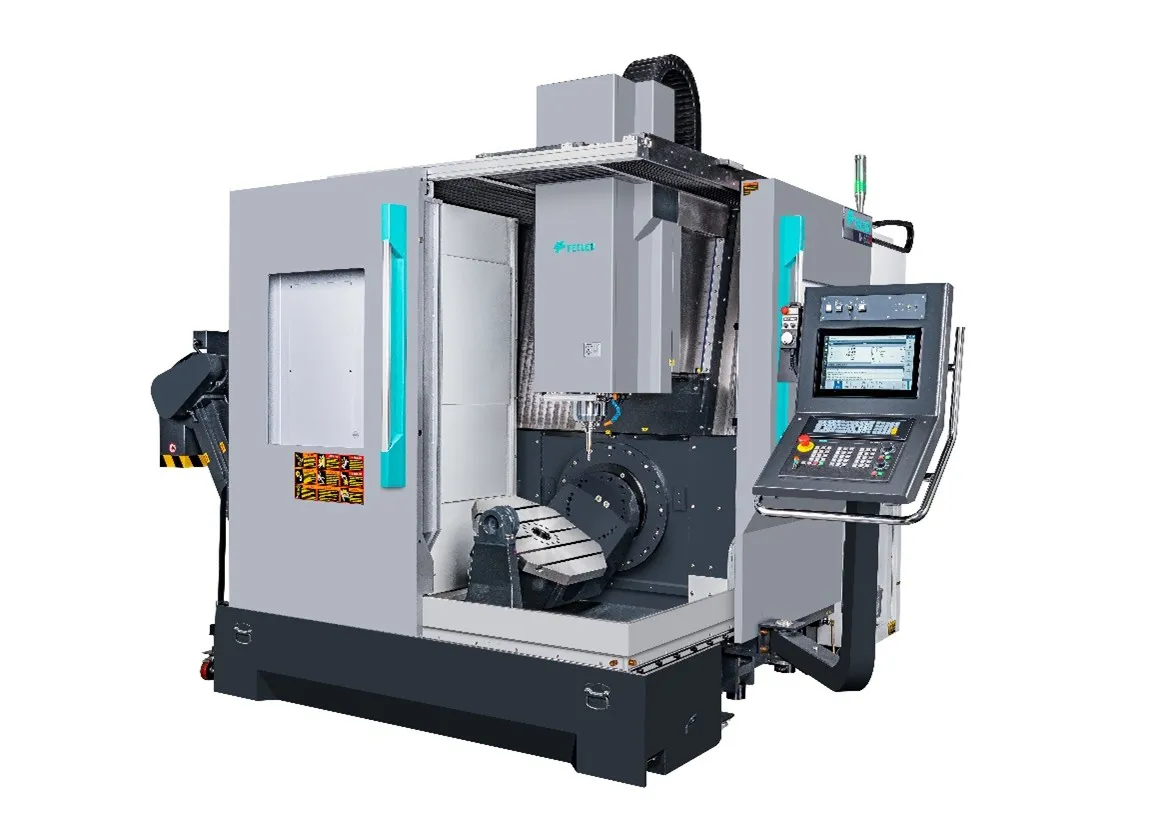
In today's highly competitive manufacturing industry, selecting the right five-axis machining center is essential. Five-axis capabilities significantly improve product quality and production efficiency, particularly in cutting complex parts where multiple-sided machining can be completed in a single setup, reducing the time from design to production. Additionally, five-axis machining centers reduce the number of workpiece clamping operations, enhance machining accuracy, and minimize the need for secondary machining, thereby greatly increasing efficiency. Moreover, their high dynamic performance enables efficient processing of hard materials, crucial for industries such as aerospace and automotive. Choosing the most suitable five-axis machining center is not only a technical investment but also a strategic decision, directly impacting a company's competitiveness and market responsiveness.
Basic Principles and Advantages of Five-Axis Machining Centers
Five-axis machining centers are high-precision manufacturing tools suitable for processing complex parts. They operate on five independent axes, allowing tools to contact workpieces from multiple angles, achieving multi-sided machining in a single setup, which is more efficient than traditional three-axis machines. Five-axis technology enhances machining efficiency and accuracy, reduces workpiece repositioning time, and provides uniform cutting loads, prolonging tool life. These machines possess greater flexibility and scalability, capable of handling more complex tasks, such as aerospace components and precision molds. This makes five-axis machining centers an ideal choice for improving product quality and manufacturing capabilities.
Identifying Your Manufacturing Needs
Determining the appropriate five-axis machine based on product type, material, and precision requirements is a crucial step. Firstly, consider the type and size of parts to be processed to determine the required worktable size and machining travel. Secondly, material selection impacts machine choice, as different materials require different cutting speeds and tools. Lastly, precision requirements are another key factor, considering the complexity of part shapes and surface accuracy to ensure the machining center meets the required precision standards. Considering these factors comprehensively can help you determine the most suitable five-axis machining center for your manufacturing needs, thereby improving production efficiency and product quality.
Selecting a Five-Axis Machining Center
There are many different brands and models of five-axis machining centers on the market, which can be confusing to choose from. Before making a selection, it's essential to understand the main brands and models available in the market. This includes understanding the technical features of each brand, comparing the performance and prices of different brands and models, and ensuring there is sufficient space and facilities to install and operate the machine. With this information, you can narrow down the selection to several models that are most likely to meet your needs. The focus of selecting a machining center should be on performance, reliability, and customer service. Performance includes processing speed, accuracy, and workpiece size, which directly affect machining efficiency and quality. Reliability relates to the stability and lifespan of the machine, while customer service includes after-sales service, maintenance, and training to ensure timely support and maintenance after purchase. Considering these factors can help you choose the most suitable five-axis machining center to meet your needs and maximize your production goals.
Considerations for Return on Investment
Considering the return on investment is also essential when choosing a five-axis machining center, requiring a comprehensive evaluation of the machine's cost-effectiveness, including purchase price, operating costs, and maintenance expenses. In addition to the purchase price, operating costs include energy consumption, operator wages, and consumables. Maintenance costs refer to the cost of machine maintenance and repair, which are factors that need to be considered.
Furthermore, long-term investment returns of the machine should be evaluated. This includes not only current market demand but also future market development trends and technological advancements. Further consideration of the machine's production capacity and efficiency, efficient machines can shorten processing time, improve product accuracy and quality, and thereby enhance overall production efficiency and output. Purchasing high-tech machines can ensure maintaining a competitive edge in the future, avoiding the cost burden of frequent equipment updates and providing a higher return on investment. Therefore, choosing a machine that maximizes production efficiency and reduces production costs is crucial for improving business profitability.
Choosing the right five-axis machining center is crucial for future business success. This decision not only affects production efficiency and product quality but also directly impacts a company's competitiveness and long-term development. Therefore, users should carefully consider their needs and market trends when making choices to make wise decisions.
Additionally, it's important to recognize that choosing a five-axis machining center is a strategic investment that requires comprehensive consideration of cost-effectiveness, technical performance, and business requirements. Before purchasing, it is recommended to communicate with multiple suppliers, compare the advantages and disadvantages of different brands and models, and ensure negotiated after-sales service and warranty terms. Ultimately, choosing the right five-axis machining center will bring long-term success and competitive advantage to the enterprise, helping it stand out in an increasingly competitive market.
FAIR FRIEND/ 06. 11. 2024
We use cookies to optimize and continuously update it according to your needs.The settings can be changed at any time under "Privacy"


 TMTS Virtual Application