

 TMTS Virtual Application
Products








more
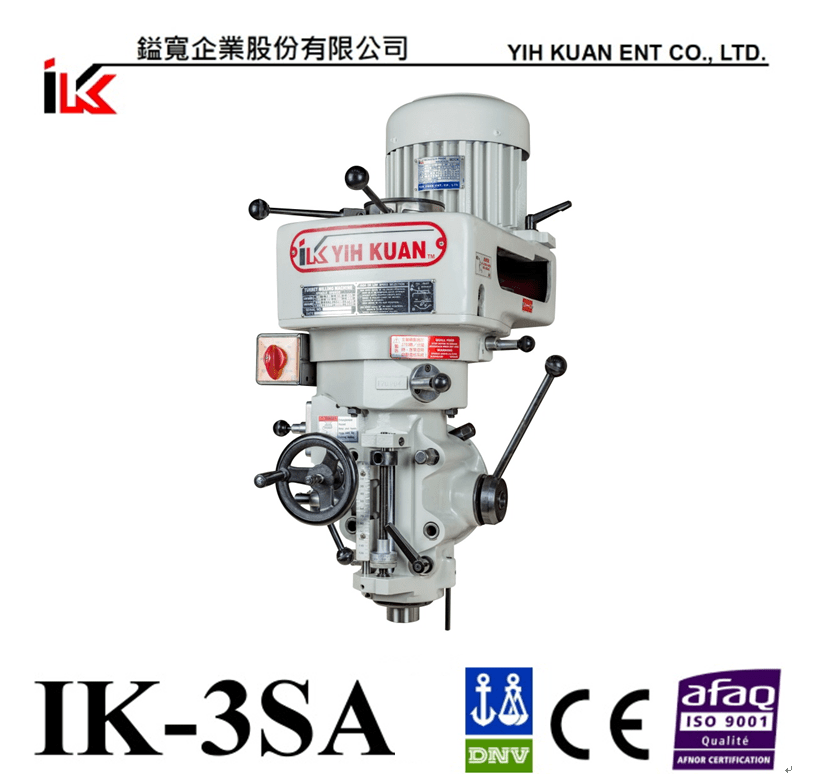
In traditional machining workshops, turret milling machines have always been essential equipment for many factories. Whether for mold modification, parts machining, drilling, milling, or small-batch production, turret milling machines offer high operational flexibility, easy maintenance, and a wide range of applications.The term “2# turret milling head” generally refers to a milling head designed for 2# turret milling machines. This type of machine is commonly found in traditional machining shops, mold factories, maintenance workshops, and machine refurbishment markets. Even with the widespread use of CNC equipment today, many 2# turret milling machines continue to play an important role in production lines.However, selecting a 2# turret milling head is not only about whether it can be installed on the machine. In actual selection, users should also consider machining requirements, spindle horsepower, motor configuration, lubrication method, machine interface, and operating habits. YIH KUAN has long focused on the design and manufacturing of milling heads. In this article, we will help you understand the application features of 2# turret milling heads and how to choose the right milling head configuration for 5HP–7.5HP turret milling machines.What Is a 2# Turret Milling Head?A 2# turret milling head can be applied to traditional turret milling machines, knee-type milling machines, vertical milling machines, or Bridgeport-type machines. It is suitable for general milling, drilling, tapping, chamfering, mold repair, and part modification.Compared with large plano milling heads or CNC milling heads, the 2# turret milling head is known for flexible operation, mature installation applications, and convenient maintenance. For users who require fast machining, small-batch production, on-site machining support, or machine refurbishment, it is a practical and cost-effective solution.If the machine body is still stable, but the milling head begins to show noise, unsmooth speed changing, reduced accuracy, insufficient cutting power, or increasing maintenance costs, users may consider replacing the milling head to restore more stable machining performance.How to Choose Between a 5HP and 7.5HP Turret Milling Head?When selecting a 2# turret milling head, spindle horsepower is one of the key factors to consider. For YIH KUAN’s 2# turret milling head series, the main application range is 5HP–7.5HP. Different horsepower configurations are suitable for different machining conditions.5HP Turret Milling Head: Suitable for Stable Machining and General Medium CuttingA 5HP turret milling head is suitable for general milling, drilling, tapping, part modification, fixture machining, and medium cutting applications. If the customer mainly machines aluminum, copper, general steel, or focuses on mold repair, parts machining, and maintenance work, a 5HP configuration usually provides stable and practical cutting performance.For users who want to balance operational flexibility, cost efficiency, and stable machining capability, 5HP is a practical choice.7.5HP Turret Milling Head: Suitable for Higher Load and Greater Cutting CapacityA 7.5HP turret milling head is more suitable for higher load applications, larger cutting tools, longer operating hours, or users who want improved cutting stability. If the customer frequently machines steel parts, mold components, or requires greater power reserve during cutting, 7.5HP provides more flexibility.Simply put, 5HP focuses on stable and practical machining, while 7.5HP provides higher cutting capacity and load capability. The final selection should still be evaluated based on the machining material, tool size, cutting depth, operating frequency, and machine structure.What 2# Turret Milling Head Models Does YIH KUAN Offer?For 2# turret milling machine applications, YIH KUAN currently offers several 2# turret milling head models, including IK-6SB2-2#, IK-6S2-2#, and IK-6FS2-2#. These models can be applied to 5HP–7.5HP turret milling machine upgrades, replacements, or new machine installations. The main differences lie in the motor configuration and whether the model includes an oil circulation system.♦ IK-6SB2-2#: Optional Inverter MotorIK-6SB2-2# is one of YIH KUAN’s 2# turret milling head models. It can be equipped with an inverter motor according to customer requirements. If the customer needs more flexible spindle speed control, or wants to adjust the spindle speed according to different materials, tools, and cutting conditions, this configuration can be considered.This model is suitable for traditional turret milling machine upgrades, milling head replacement, machine refurbishment, or new machine installation.♦ IK-6S2-2#: Oil Circulation ConfigurationThe key feature of IK-6S2-2# is its oil circulation function. The oil circulation design helps maintain stable lubrication during operation, which is beneficial for long-term use, stable machining, and equipment maintenance.For customers who value milling head lubrication, long operating stability, or easier daily maintenance, IK-6S2-2# can be considered.♦ IK-6FS2-2#: Inverter Motor + Oil CirculationIK-6FS2-2# combines both an inverter motor and oil circulation function. Compared with standard configurations, this model provides both more flexible speed control and a more complete lubrication circulation system.For customers with more varied machining requirements, longer operating hours, or those who want both flexible speed adjustment and stable lubrication, IK-6FS2-2# is a more advanced option.Comparison of the Three ModelsModelMain FeaturesSuitable ApplicationsIK-6SB2-2#Optional inverter motorFlexible speed control, milling head upgrade, replacement, or new machine installationIK-6S2-2#Oil circulationStable lubrication, long operating hours, and easier maintenanceIK-6FS2-2#Inverter motor + oil circulationFlexible speed control with complete oil circulation lubrication
YIH KUAN
/ 05. 21. 2026
more
In large workpiece machining, mold manufacturing, and complex component production, many machining shops frequently face the same challenges:Workpieces are too large and difficult to repositionLimited space for side machiningCertain holes or side walls are difficult to machine directlyMulti-face machining requires repeated clampingLong machining time and accumulated tolerance errorsEspecially in gantry milling machines and CNC gantry machines, as workpieces become larger and machining requirements become more complex, improving machining flexibility and efficiency has become a major challenge for manufacturers.90° right angle heads have become an important solution for improving machining flexibility in gantry milling and CNC gantry machining applications, especially for large workpieces, multi-face machining, and side machining requirements.Yih Kuan Enterprise Co., Ltd. has long specialized in the development and manufacturing of various milling heads, including 90° right angle heads, universal milling heads, and special angle heads, helping gantry milling and CNC gantry machining equipment expand machining capability, reduce setup time, and improve overall machining efficiency.Why Do Gantry Milling Machines and Large CNC Gantry Machines Particularly Need Right Angle Heads?For large workpieces, the biggest challenge is often not the machining itself, but rather “repositioning and re-aligning the workpiece.”For example:Large moldsAerospace componentsStructural partsLarge machine basesAutomation equipment componentsThese workpieces may weigh hundreds of kilograms or even several tons.Every repositioning process may:Require lifting equipmentIncrease labor costsIncrease positioning errorsIncrease machine downtimeOne of the greatest advantages of a 90° right angle head is that it allows machining from different directions, reducing the need to reposition large workpieces.How Do 90° Right Angle Heads Improve Machining Flexibility?1. Enhancing Side Machining CapabilityStandard machine spindles typically perform only vertical machining, but many workpieces require:Side holesSide groovesSide wall machiningDeep cavity side machiningWithout a right angle head, manufacturers may need to:Reposition the workpieceRe-clamp the partUse special fixturesBy integrating a 90° right angle head, the machine can directly perform side machining, reducing process complexity while minimizing positioning errors.2. Completing Multi-Face Machining in a Single SetupIn precision machining, fewer setups usually mean higher accuracy.This is because every re-clamping process may introduce:Concentricity errorsParallelism errorsReference offsetAccumulated dimensional errorsWith a 90° right angle head, multiple machining operations can be completed in one setup, including:Top surface machiningSide machiningSide hole machiningMulti-angle machiningThis significantly improves machining consistency.3. Improving Flexibility for Large Workpiece MachiningFor gantry milling machines, large workpieces are often restricted by:Machining space limitationsTool interferenceTravel limitationsA right angle head changes the machining direction, allowing tools to access:Narrow areasDeep cavitiesSide wall positionsAreas with high interferenceThis is particularly important for large molds and heavy mechanical components.Different Types of 90° Milling Heads for Different Machining NeedsYih Kuan Enterprise Co., Ltd. currently provides several types of milling heads, including:90° Universal Milling HeadsHeavy-Duty Right Angle HeadsHigh-Speed Precision Right Angle HeadsEach product is designed for different machining applications.Yih Kuan 90° Milling Head Comparison TableModelProduct TypeKey FeaturesSpeedSuitable ApplicationsMachining CharacteristicsSuitable EquipmentIK-U9090° Universal Milling HeadMulti-angle rotation and high machining flexibility800rpm / 2000rpmComplex angle machining, multi-face machining, large workpiecesFlexible machining directionGantry milling machines, CNC gantry machinesIK-A90Heavy-Duty 90° Right Angle HeadHigh torque and high rigidity800 rpmRough mold machining, medium carbon steel, large face millingLow-speed heavy cuttingLarge gantry milling machines, heavy-duty machining equipmentIK-N90High-Speed Precision 90° Right Angle HeadHigh speed, high precision, and low vibration2000 rpmAluminum parts, precision components, high surface finish machiningHigh-speed precision machiningCNC gantry machines, precision machining equipmentIK-U90: Improving Flexibility for Complex MachiningThe biggest advantage of the IK-U90 90° universal milling head is its ability to perform multi-angle machining.Compared to conventional fixed right angle heads, universal milling heads further improve:Side machining capabilitySpecial angle machining flexibilityLarge workpiece machining adaptabilityIt is particularly suitable for:Five-face machiningLarge mold machiningDifficult-to-reposition workpiecesMulti-direction machining requirementsFor gantry milling machines, it can effectively reduce workpiece handling and re-clamping time.IK-A90: Ideal for High-Torque Heavy Cutting ApplicationsThe IK-A90 is designed as a heavy-duty right angle head.Its key features include:High rigidityHigh torque outputSuitable for heavy cutting operationsIt is especially suitable for:Mold machiningMedium carbon steel machiningLarge workpiece rough machiningHigh-load cutting applicationsIn large gantry milling applications, this type of milling head can effectively improve material removal efficiency.IK-N90: Designed for High-Speed and Precision MachiningThe IK-N90 is positioned for high-speed precision machining applications.Its features include:High rotational speedPrecision gear transmissionReduced machining vibrationStable surface finishing qualityIt is suitable for:Aluminum machiningPrecision moldsHigh-speed cuttingHigh surface finish machiningIt is particularly suitable for CNC gantry machines that require both machining efficiency and surface quality.How Do 90° Right Angle Heads Improve Machining Efficiency?1. Reducing Setup and Repositioning TimeLarge workpiece repositioning often requires:Cranes or lifting equipmentAlignment adjustmentsRepositioning proceduresReference point recalibrationThese processes are not actual cutting time but rather “non-productive time.” Right angle heads can effectively reduce these downtime procedures, allowing machines to spend more time on actual machining.2. Shortening Overall Machining Cycle TimeWhen machining processes are simplified:Fewer machining operations are requiredClamping frequency is reducedAlignment time becomes shorterThe total machining cycle time can be significantly reduced, especially for high-mix, low-volume production and large component machining.3. Increasing Machine UtilizationWith a 90° right angle head, a single machine can perform machining from multiple directions.This means:Higher equipment utilizationBetter machine investment efficiencyReduced need for additional equipmentKey Considerations When Selecting a 90° Right Angle HeadSelection FactorDescriptionSpindle InterfaceMust match machine specificationsMachining MaterialRequirements differ for aluminum, steel, or mold machiningSpeed RequirementDepends on high-speed or heavy cutting applicationsRigidity RequirementImportant for heavy cutting or high-load machiningMachining SpaceCheck for possible interference issuesYih Kuan Enterprise Co., Ltd.’s Milling Head SolutionsYih Kuan Enterprise Co., Ltd. specializes in the development and manufacturing of various milling heads, providing:90° right angle headsUniversal milling headsSpecial angle milling headsCustomized milling head solutionsThese products are widely used in:Gantry milling machinesCNC gantry machinesMold machiningAerospace machiningLarge machinery machiningYih Kuan’s milling heads utilize precision gear transmission designs that balance:RigidityAccuracyTorque outputMachining stabilityThese solutions help customers improve machining efficiency and overall machine capability.ConclusionIn modern CNC gantry machining and gantry milling operations, 90° right angle heads are no longer simply optional accessories. They have become important machining tools for improving machining flexibility, reducing setup time, and increasing machine efficiency.Especially for large workpieces, multi-face machining, and complex machining applications, integrating the right angle head can effectively improve:Machining workflowProduction efficiencyMachining accuracy stabilityMachine utilizationIf your machining applications involve large workpieces, side machining, or complex angle machining, feel free to contact Yih Kuan Enterprise Co., Ltd. to learn more about the milling head solutions suitable for your machining requirements.
YIH KUAN
/ 05. 11. 2026
more
Figure 1. Group photo of the Government officials and industry leaders. During the Taiwan International Machine Tool Show (TMTS 2026), held grandly for the first time at the Taichung International Exhibition Center this year, Hantop Intelligence Tech was invited to participate in a technical seminar event hosted by the Ministry of Economic Affairs of Taiwan (MOEA), and the Precision Machinery Research and Development Center (PMC). This event brought together leaders across the semiconductor industry to deliver keynote speeches. The event was highly anticipated and the venue was fully packed with experts from all over the world.Mr. Shih-Huang Chu, Senior Director of Hantop Intelligence Tech, was invited to deliver a keynote speech titled "Transitioning from Metal to Ceramic and Hard-Brittle Material Machining," addressing the current transition challenges faced by the machining industry. Through case studies of one of our major clients, he provided an in-depth analysis of how traditional metal machining companies successfully capitalized new supply chain business opportunities in the semiconductor and AI era by introducing Hantop's Ultrasonic Technology! The Crossroads of Traditional Precision Machining: Embracing the AI Chip OpportunityIn recent years, the precision machining industry has faced immense challenges. Market competition is intensifying, and the profit margins are gradually shrinking to suffocating levels. Amid the surging demand for AI chips, many machining factories have shifted their focus to high-end materials required for semiconductor equipment and advanced packaging, securing new orders for "semiconductor-grade ceramics. "! The Invisible Hero Behind AI Computing Power: Why Ceramic? As the performance of AI chips driven by leading companies like NVIDIA continues to double, advanced packaging technologies (such as CoWoS, CPO, etc.) and thermal management have become the critical factors determining whether computing power can be stably exerted.Key Indicator 1: The Extreme Demand for Coefficient of Thermal Expansion (CTE)When facing the extreme high temperatures and plasma environments of AI chips, traditional metal materials are often limited by mismatched Coefficients of Thermal Expansion (CTE) or poor corrosion resistance, which can severely shorten the lifespan and cause damage and failure to precious AI chips.Key Indicator 2: Material Stability in Harsh EnvironmentsTherefore, silicon carbide (SiC), aluminum oxide (Al2O3) ceramics, and composite materials like aluminum silicon carbide (AlSiC), which possess excellent thermal properties and stability, have become the top choices for AI chip heat dissipation substrates, test fixtures, and semiconductor equipment components. This wave has brought new opportunities to the precision machining industry, but it has also introduced entirely new challenges. Figure 2. Senior Director Shih-Huang Chu delivered the keynote speechWith Great Opportunity Comes Challenges: Why is Ceramic So Difficult to Handle? However, with great opportunity comes great challenges.Case Study: A Story of Blood, Toil, Tears and SweatDirector Chu shared a case study during his speech: In early 2025, a machining factory specializing in "Metal Heat Dissipation Plates" actively sought transformation as it faced “Red Ocean” competition with declining gross margins. In the second half of the year, they finally managed to secure a sampling order for ceramic materials, only to fall into months of painful trial and error. "They cross-tested all the cutting tools and other key parameters relentlessly, but the results were constant failures," Director Chu mentioned. The most common situations were: severe chipping on the ceramic edges and severe tool wear.The Fundamental Difference in Material Properties: Hardness vs. Fracture ToughnessThe scientific reason behind lies in the huge difference in material properties: ceramics have very high hardness but low fracture toughness. If you approach it with the traditional metal "cutting" mindset, it's like a collision course—it breaks upon contact. This forced them to undergo its first paradigm shift: transitioning from the "removal" to the "brittle abrasive" mechanism, changing from cutting to micro-grinding.Table 1. Comparison of Material Hardness and Fracture ToughnessMaterialMohs HardnessFracture Toughness (Mpa*m^1/2)DescriptionDiamond 10 (Maximum) Very Low (1.5 ~ 5) The hardest but also very brittle. Capable of cutting all materials, but highly susceptible to "brittle fracture" (chipping) when subjected to vibration or impact.SiC, Al2O3,Tungsten Carbide(WC) 9 ~ 9.5 (Very High) Extreme Low (Approx. to 0) Extremely high hardness and shatters easily upon impact. Similar to glass or ceramic, it is difficult to machine and typically requires ultra-hard cutting tools.Hardened Steel, Chromium (Cr) 8 ~ 8.5 (High) Moderate Possesses both a certain level of hardness and the basic toughness of metal; more difficult to cut than general steel. General Steel(e.g., SUS Stainless Steel) 4 ~ 5 (Moderate) Very High (200+) Extremely tough. It will dent and deform under heavy impact but is not prone to complete fracture; it is the most common engineering material. Aluminum (Al) 3 (Low) High Soft in texture with good ductility and toughness; relatively easy to cut and machine.Figure 3. Explanation of the differences in characteristics between hard-brittle materials and traditional metal materials. The Devil is in the Details: Why Changing to Diamond Tools is Not Enough?Many business owners believe that replacing their tools with diamond grinding pins can solve the problem, but in actual combat, they encounter a more hidden challenge.The Hidden Challenge: Powder AdhesionThe client found that after switching to diamond tools, it seemed to be alright at the first glance, but after a few runs, it started to go wrong again. Upon removing the tool, they discovered that the finely ground ceramic powder was firmly stuck to the diamond particles. When the diamonds are covered by powder and their exposure is insufficient, the tool completely loses its grinding ability. This is exactly the core reason why "just changing the tool is not enough; a new method must be introduced: Ultrasonic Technology."Solving New Problems Requires New Methods and a "Paradigm Shift" To successfully enter the field of hard-brittle materials, challengers must undergo a complete paradigm shift:Shift in machining methods: From traditional "cutting" to "grinding".Shift in tool selection: From general-purpose tungsten carbide tools, a full upgrade to "diamond tools".Shift in material machining concept: From the "removal" to the "brittle abrasive" mechanism adapted for hard-brittle materials. In this process, how to balance machining efficiency and cutting force, while perfectly controlling surface quality and suppressing material cracks, has become the decisive task for improving yield rates.Hantop's Solution: The "Self-Sharpening" Magic of Ultrasonic TechnologyTo solve the problems of powder adhesion and machining efficiency, the client ultimately introduced Hantop's ultrasonic-assisted machining module.Revolutionary Breakthroughs Driven by 20,000+ High-Frequency Micro-VibrationsThrough high-frequency micro-level vibrations of over 20,000 times per second, it brought a revolutionary breakthrough to the machining process:Breakthrough 1: Tool Self-SharpeningThe microscopic mechanism generated by high-frequency vibration can shake off the underlying binder, allowing new diamond particles to be continuously exposed, ensuring the tool always remains in its sharpest state.Breakthrough 2: Smooth Chip RemovalThe vibration mechanism can effectively shake off and carry away the ceramic powder, avoiding scratches on the workpiece and completely solving the downtime problem caused by powder adhesion.Breakthrough 3: Stress Elimination and Resistance Reduction Significantly reduces cutting resistance and residual stress, minimizing the incidence of ceramic edge cracks.Figure 4. The principles of ultrasonic-assisted machining. The Invisible Key to Successful Transition: The Entrepreneurial SpiritThe Determination to Believe You Can Do ItAt the end of the speech, Director Chu emphasized that technical equipment is just a tool, and the true key to a successful transition lies in the "Entrepreneurial spirit of believing you can do it." The road to ceramic machining will inevitably encounter challenges, but for those business owners who view problems as a "necessary process" and actively seek solutions, it is only a matter of time.Seamless Upgrades for Existing Machines to Achieve Dual-CapabilityThe role of Hantop Intelligence Tech is to provide the most stable ultrasonic modules that are compatible with over 90% of CNC machine brands, allowing business owners to smoothly upgrade without investing in costly specialized equipments, realizing a multi-capable production line that "can handle both hard-brittle materials and metals." On the path to the high-value-added semiconductor and AI market, we back you.Let us help you overcome the threshold of hard-brittle material machining through technology upgrades, accurately positioning you into the global AI supply chain! Figure 5. Examples of machine tool brands compatible with Hantop's ultrasonic-assisted machining module. 📧Contact Us: Consult on ultrasonic solutions for hard-brittle materials! 💡Click here to learn about more cases💡 💡Click here to request for product catalog💡 TEL:+886-4-2285-0838EMAIL:sales@hit-tw.com
/ 04. 29. 2026
more
Introduction: The Overlooked Key to Milling Machine Angle Head PerformanceWhen discussing a milling machine angle head, most engineers focus on cutting capacity, angle flexibility, and torque performance. However, one critical design feature is often overlooked: the flange interface.In real machining applications, the performance of a milling machine angle head depends not only on cutting ability, but also on how well it integrates with the machine tool. A poorly designed or inconsistent flange interface can result in longer setup time, compatibility issues, reduced machining accuracy, and unstable cutting performance.As manufacturing moves toward high-mix, low-volume production and greater flexibility, fast changeover and easy equipment integration have become increasingly important. YIH KUAN ENT CO., LTD. specializes in the development of milling heads and angle heads for milling machines, helping customers expand machining capability and handle more complex applications. To fully achieve these benefits, standardized flange interface design plays a vital role.What Is the Flange Interface of a Milling Machine Angle Head?The flange interface is the key connection structure between the milling machine spindle and the angle head. Its main functions include:Ensuring accurate mounting and positioningTransmitting spindle torque to the cutting toolMaintaining concentricity and machining precisionProviding the rigidity required during machiningIn other words, the flange interface is not just a simple connector. It is a core design element that directly affects the accuracy, stability, and overall performance of the milling machine angle head.Problems Caused by Non-Standard Flange InterfacesIn many machining environments, different angle heads use different flange interfaces. This can create several practical problems:Recalibration is required every time the angle head is changedInstallation errors are more likely to happenATC (Automatic Tool Changer) settings become more complicatedMore spare parts must be stocked and managedChangeover time increases, reducing production efficiencyThese problems are especially common in high-mix, low-volume machining environments, where frequent switching between machining tasks is required.Benefits of a Standardized Flange Interface for Milling Machine Angle HeadsA standardized flange interface allows an angle head to become more than a standalone accessory. It becomes part of a flexible and modular machining system.1. Faster Changeover and Shorter Setup TimeWith a standardized flange interface:Different angle heads can be replaced quicklyRe-alignment and repeated calibration are minimizedMachine downtime can be significantly reducedThis is especially valuable for manufacturers that need to switch between multiple machining operations.2. Lower Inventory and Management CostsA standardized flange design helps reduce operational complexity by allowing:One interface to support multiple angle headsFewer spare parts and mounting componentsSimpler storage and easier inventory managementThis can reduce both maintenance burden and management cost.3. Better Compatibility and Greater Machining FlexibilityA standardized flange interface for milling machine angle heads makes it easier to:Switch quickly between different machining requirementsApply angle heads to different machine configurationsSimplify equipment integration and implementationThis improves the flexibility of the overall machining system.4. More Stable Accuracy and Machining QualityA unified flange interface also helps maintain:Consistent positioning referenceReduced runout errorBetter machining consistencyMore stable machining qualityFor precision machining, flange consistency is a critical factor.How YIH KUAN Angle Heads Improve Milling Machine FlexibilityYIH KUAN ENT CO., LTD. offers a complete range of angle heads for milling machines to meet different machining requirements, including:90-degree angle headsDeep-hole machining angle heads45-degree universal milling headsExtended-type angle headsThese milling machine angle heads are widely used in applications such as:Side millingSide-hole drilling and tappingDeep cavity machiningInclined surface machiningBy selecting the right angle head and combining it with a standardized flange interface, manufacturers can improve machine flexibility and reduce setup time.YIH KUAN’s Key Advantage: Standardized Flange Interface DesignOne of YIH KUAN’s main technical strengths is that different angle heads are designed with a standardized flange interface.This means:Different angle heads can share the same mounting interfaceReplacement can be completed quickly without repeated setupThe risk of operator error can be reducedChangeover time can be significantly shortenedWith this design, the milling machine angle head becomes a modular machining solution rather than just a single-purpose accessory.Applications of Standardized Flange Interfaces in Different IndustriesMold IndustryIn mold manufacturing, deep cavity machining and side machining are often required in the same workflow. A standardized flange interface helps reduce setup time and improve machining efficiency.Automotive Parts IndustryFor side-hole machining and cross-hole machining, quick changeover and stable production are essential. Standardized angle head interfaces are ideal for mass production environments.Aerospace IndustryAerospace parts often require multi-angle machining with high precision. A stable flange interface helps improve consistency, rigidity, and machining reliability.General Machine ShopsGeneral machining shops often handle small-batch, high-variety production. Standardized flange systems allow faster response to changing machining requirements.Key Factors to Consider When Choosing an Angle Head Flange SystemSpindle specifications of the milling machine (NT / BT / CAT / HSK)Input and output side compatibilityATC automatic tool change requirementsThrough-coolant or center coolant requirementsMachine load capacityRequired torque and spindle speedWhether the flange interface is standardizedA proper flange match helps avoid installation problems and ensures the best machining performance.FAQ About Milling Machine Angle Head Flange InterfacesCan all milling machine angle head flanges be interchanged?Not always. Different brands often use different flange designs, so compatibility issues may occur.Why is a standardized flange interface important?A standardized flange interface improves efficiency, reduces setup errors, simplifies operation, and supports faster angle head replacement.Can a standardized flange interface improve productivity?Yes. It is especially useful in machining environments that require frequent tool changes, fast setup, and flexible production.Does flange design affect machining accuracy?Yes. Flange design directly affects concentricity, rigidity, runout performance, and machining stability.Conclusion: Why Standardized Flange Interfaces MatterIn modern machining, productivity depends not only on cutting performance, but also on setup efficiency, machine integration, and operational flexibility.By adopting a standardized flange interface for milling machine angle heads, manufacturers can:Reduce setup timeImprove machining stabilityLower operational complexityIncrease machine utilizationBuild a more flexible machining environmentWith years of experience in milling head manufacturing, YIH KUAN ENT CO., LTD. provides a wide range of angle heads for milling machines and helps customers improve efficiency through standardized flange interface design.If you want to improve machining capability without increasing equipment investment, choosing a milling machine angle head with a standardized flange interface can be a highly effective solution.
YIH KUAN
/ 04. 24. 2026
Double Column Grinding Machine, Production CNC Grinder, Vertical Grinding Center, Linear Motor Drive Grinder, Nano Precision Hydrostatic CNC Grinder, Surface and Profile CNC Grinder, CNC Slicing Grinder, Fully Auto Surface Grinder, Semi-automatic Grinder, Manual Grinder, Double Column Machine Center, Horizontal Boring Machine, Vertical Machine Center, Vertical Turning Lathe, Multi-Function CNC Lathe, Horizontal Turning Machine
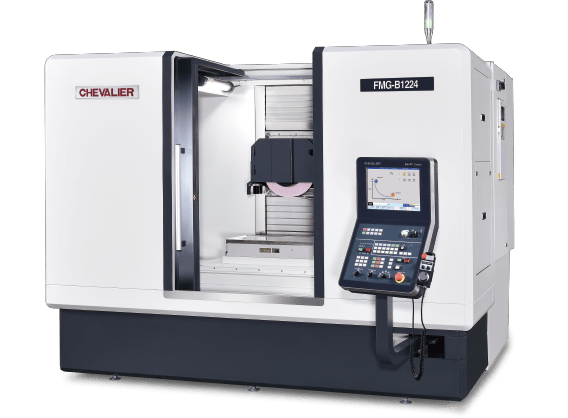
High Efficiency Traveling Column Precision Profile Grinder_FMG-B1224AWC
Automatic diamond roller change module
Automatic wheel change module
The YCM UV650 5-axis vertical machining center provides excellent cutting performance and high accuracy for simultaneous 5-axis application with just one setup. Designed to reduce part handling, setup and overall lead-time, while improving part quality, precision and surface finish of complex shapes and contours required for multiple industries such as job shop, medical, aerospace, and die & mold.
For more information on YCM's products and solutions, please visit:
Website: https://www.YCMCNC.com/en
Facebook: https://www.facebook.com/YCMCNCMACHINE/
Twitter: https://twitter.com/YCMCNCMACHINE
LinkedIn: https://www.linkedin.com/company/ycmcncmachine
Instagram: https://www.instagram.com/ycmcncmachine/
The wind turbines have grown in size in both height and blade lengths and generate more energy.
The casting workpiece processing is a challenge for the maker to handle the production.
Honor PL-600CM Intelligent Vertical Turning Center is the high-rigid vertical lathe based on the gantry-type with a Y-axis mechanism, and collects multi-functions that can cover the processing requirements by the vertical lathe, the gantry-type machine, and even the horizontal machining center at the same time to achieve done in 1 requirement.
● Champion of Taiwan
- 6-meter table turning center
- Extremely outstanding wind power solution
- Digital-twin technology applied
More efficient, better quality, this is HONOR SEIKI delivers our solutions.
Tongtai has completed hardware , software and service to support our customers to plan from single machine to the production lines , also integrate cross-brands devices. In the other hand, we will use digital-twin to assist the production line planning to decrease the risk of design change. It could also simulate the machining before real processing to optimize the production efficiency.



















We use cookies to optimize and continuously update it according to your needs.The settings can be changed at any time under "Privacy"